

Textile Exchange

Standard Overview
Textile Exchange is known for developing and managing a suite of standards and certifications that promote sustainability in the textile and apparel industry.
These standards are designed to help companies verify and communicate their use of preferred materials, such as organic, recycled, or responsibly sourced fibers, while ensuring transparency and integrity in their supply chains.

Standard Owner
Textile Exchange is a global nonprofit organization that encourages the adoption of sustainable practices in the textile industry.
Established in 2002, it collaborates with brands, retailers, manufacturers, and other stakeholders to reduce the environmental and social impacts of textile production.
For more detail, please visit Textile Exchange website.
Recognition
QSI has signed an agreement as subcontractor CB for Clean Globe International for Textile Exchange programs.
Certification Scopes

Responsible Down Standard (RDS)
Learn More
The Responsible Down Standard (RDS) ensures the ethical sourcing of down and feathers used in products such as jackets, bedding, and outdoor gear.
The standard promotes animal welfare and supply chain transparency by setting strict guidelines.
The Responsible Down Standard (RDS) ensures the ethical sourcing of down and feathers used in products such as jackets, bedding, and outdoor gear.
The standard promotes animal welfare and supply chain transparency by setting strict guidelines.

Organic Content Standard (OCS)
Learn More
The Organic Content Standard (OCS) verifies the presence and amount of organic material in a final product.
It ensures transparency and integrity in the supply chain by tracking organic raw materials from their source to the finished product.
The Organic Content Standard (OCS) verifies the presence and amount of organic material in a final product.
It ensures transparency and integrity in the supply chain by tracking organic raw materials from their source to the finished product.
Recycled Claim Standard (RCS)
Learn More
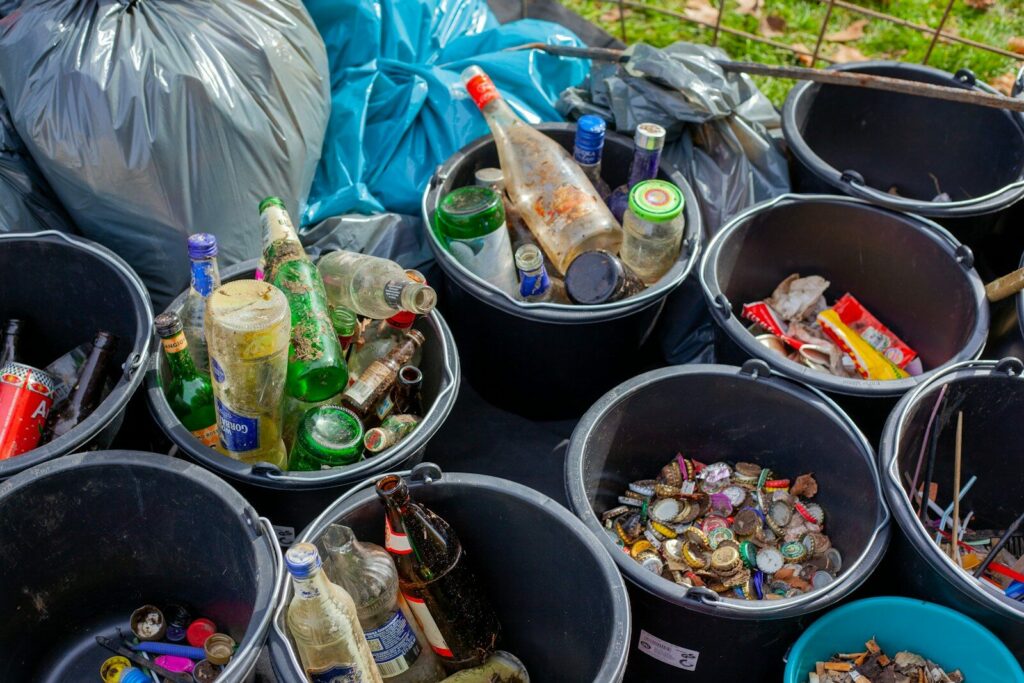
The Recycled Claim Standard (RCS) sets the requirements for recycled materials and chain of custody.
Designed to increase the use of recycled content, the RCS applies to products with at least 5% recycled material.
It does not cover social or environmental aspects.
The Recycled Claim Standard (RCS) sets the requirements for recycled materials and chain of custody.
Designed to increase the use of recycled content, the RCS applies to products with at least 5% recycled material.
It does not cover social or environmental aspects.
Global Recycled Standard (GRS)
Learn More
The Global Recycled Standard (GRS) sets the requirements for recycled content, chain of custody, social and environmental practices, and chemical restrictions.
Its goal is to increase the use of recycled materials while reducing or eliminating the harm associated with their production.
The GRS applies to products containing at least 20% recycled material (or at least 50% to display the GRS logo).
The Global Recycled Standard (GRS) sets the requirements for recycled content, chain of custody, social and environmental practices, and chemical restrictions.
Its goal is to increase the use of recycled materials while reducing or eliminating the harm associated with their production.
The GRS applies to products containing at least 20% recycled material (or at least 50% to display the GRS logo).
Explore Common Topics and Answers
Find answers to our commonly asked questions about the services we provide. If you require further information, please contact us.
GRS covers a full audit scope, from production, chemical, environment & social aspects.
Yes, minimum recycled content in GRS is 20%, but if you are planning to label your product with a GRS logo then it has to be 50% as minimum.
Yes, you may just skip it as it is only an optional item.
According to the Accepted Equivalent Standards V2.0 released by Textile Exchange, it is said that “No equivalent standards or audits are currently recognized for the GRS”.
It means that a full GRS audit shall be implemented.
A chain of custody identifies a material as it moves through all the steps of a manufacturing process from its origin to end use.
In the case of recycled materials, the manufacturing steps involve the
collection, concentration, recycling, production and trading of recycled materials.
The chain of custody requires maintaining and transferring information about the level of recycled material content in each step.
This acts as a monitoring and controlling mechanism throughout the value chain of certified final products.
Recycled materials that meet the GRS requirements can be worth more since the requirements have been independently verified.
GRS paperwork should also satisfy requests for recycled materials information even from non-certified organizations.
Inspections (which are only completed at sites that are not run by individuals and require legal authorization) are limited to the verification of this authorization and confirmation of description of recycled materials.
The organization being inspected must make all areas, documents and employees (for interviewing) available.
The GRS intent is to help companies verify recycled content in their products as well as identify companies in their supply chain with responsible social, environmental and chemical practices.
The standard includes rigorous requirements to achieve and maintain certification including:
- Onsite audit and surveillance requirements at all levels of the supply chain;
- Recertification requirements.
Certification does not require that suppliers be disclosed to the brand and/or retailer.
When a product is labeled for GRS, the certification number of the last certified material or product owner must be listed.
If the brand/retailer wishes to hide the identity of that supplier, they should become certified so they can list their own certification number.
The GRS includes criteria that address social, environmental and chemical practices throughout the supply chain.
RCS covers only production aspect, and does not include any chemicals that may be used in it.
Yes. RCS is divided into two grades, blended & 100. For RCS Blended, content ranges from 5-95%, while RCS 100 shall more than 95%.
No, it is mandatory if only the entity is in the material recycling phase & desires to make a claim.
Yes, you may just skip it as it is only an optional item.
According to the Accepted Equivalent Standards V2.0 released by Textile Exchange, the only recognized standard for RCS input is only GRS.
The Recycled Claim Standard (RCS) label enables to market of textiles made from recycled raw materials.
The RCS label guarantees:
- Traceability of recycled raw materials;
- Transparent communication, clear labelling;
- Stakeholder engagement.
The labelling by an independent certification body validates the conformity of your practices according to the Recycled Claim Standard (RCS).
RCS can be applied to all products containing at least 5% recycled material.
The OCS requires all organizations in a supply chain to be certified beginning with post-harvest processing sites through to the seller in the final business-to-business transaction.
The retailer of a finished organic content product does not need to be certified. Examples of the first post-harvest processing sites can include:
- Ginning for cotton;
- Retting for bast fibres;
- Boiling and washing cocoons for silk;
- Scouring for wools and other animal fibres (respective grading if this step is undertaken before scouring and not already covered by the organic farming certification).
The OCS does not define organic content. It provides third-party verification of organic material content in a product.
It does recognize the output of organic farms that have been certified by an independent third party to the USDA National Organic Program (NOP), Regulation (EC) 834/2007, or other organic standards as approved in the IFOAM Family of Standards.
Buyers of the OCS product are responsible to set any requirements on the specific organic standards to which the input material should be certified.
The OCS may be used with any product that contains non-food organic material. The OCS applies to products that contain from 5% to 100% organic material.
Certification to OCS includes compliance with the requirements of the CCS. The CCS is the chain of custody foundation for all Textile Exchange standards.
The standard defines, among other things, the operational content of a management system to maintain full transparency of materials as they flow through the supply chain.
This includes record keeping of inputs and outputs of each production step, labeling and identification and segregation of materials.
No, the OCS requires certification from post-harvest operations to the seller in the last business-to-business transaction.
Since the final sale by the retailer is a business-to-consumer sale, the retailer is exempt.
All Organic Materials entering the supply chain shall have a Transaction Certificate (TC) issued by the certification body.
TCs are required to document each time that an OCS/CCS product changes ownership. The seller must apply for a TC with the certification body.
NSF, as the certification body, is responsible to ensure the seller has met all the certification requirements prior to that sale.
It is the responsibility of the consignee of any claimed material and CCS product to inspect the packaging and verify the appropriate information is included in the product marking and corresponding documentation (e.g. invoice, bill of lading, TC) upon receipt of the certified product.
The Responsible Down Standard (RDS) aims to ensure that down and feathers come from animals that have not been subjected to any unnecessary harm
As of now, Textile Exchange standards are not designed to provide full supply chain transparency.
A brand may take the decision to do this additional investigation, but it is not included as part of the standard.
If you are interested in doing the work of identifying all of these sites, then you would need to work directly with your suppliers and request that they disclose their sources to you.
The Content Claim Standard (CCS) is a chain of custody standard that provides companies with a tool to verify a specific input material in a final product.
It requires that each organization along the supply chain take sufficient steps to ensure that the integrity and identity of the input material are preserved.
All Textile Exchange Standards apply the Content Claim Standard as the chain of custody requirements used to track materials from the source to the final product.
This allows for sites to become certified to multiple Textile Exchange standards with minimal additional auditing required.
No. The CCS is the foundation of all of our standards and does not require it’s own certification.
It provides a strong chain of custody system from the source to the final product for all Textile Exchange standards.
Program to assure the claim being made by the producer. Assurance is given by the third party (Certification Body/CB) as the result of a successful audit.
Yes, all products containing recycled-material can be registered in this program.
It depends on your claim plan. Currently, it has two programs, GRS & RCS.
GRS provides a full audit from production, chemical, environment & social, while RCS is only for production aspects.
Some major brands in the textile market have currently used recycled-material as part of or even as the only material for its products. They are like H&M, Adidas, etc.
According to the guidances set in either GRS & RCS, conversion from bottle into flake is still classified as material collection, and in this phase, it does not have to be certified.
No, in a normal condition it does not have to be inspected again. But, it is necessary to report the details of sales to Certification Body (CB), and this data will be verified by CB in order to create a document called Transaction Certificate (TC).
This document will be used as an additional assurance for that particular shipped product.